
Community
'GMA' co-stars Robin Roberts and George Stephanopoulous receiving stars on Hollywood Walk of Fame
By Katherine Langford
Advertisement · Why this ad?
Katherine oversees editorial operations across all six brands. Before joining The Meridan Group, she spent 14 years at the Minneapolis Star Tribune, where she led the metro desk through its digital transformation. She holds a Master's in Journalism from Northwestern's Medill School.
More from Katherine →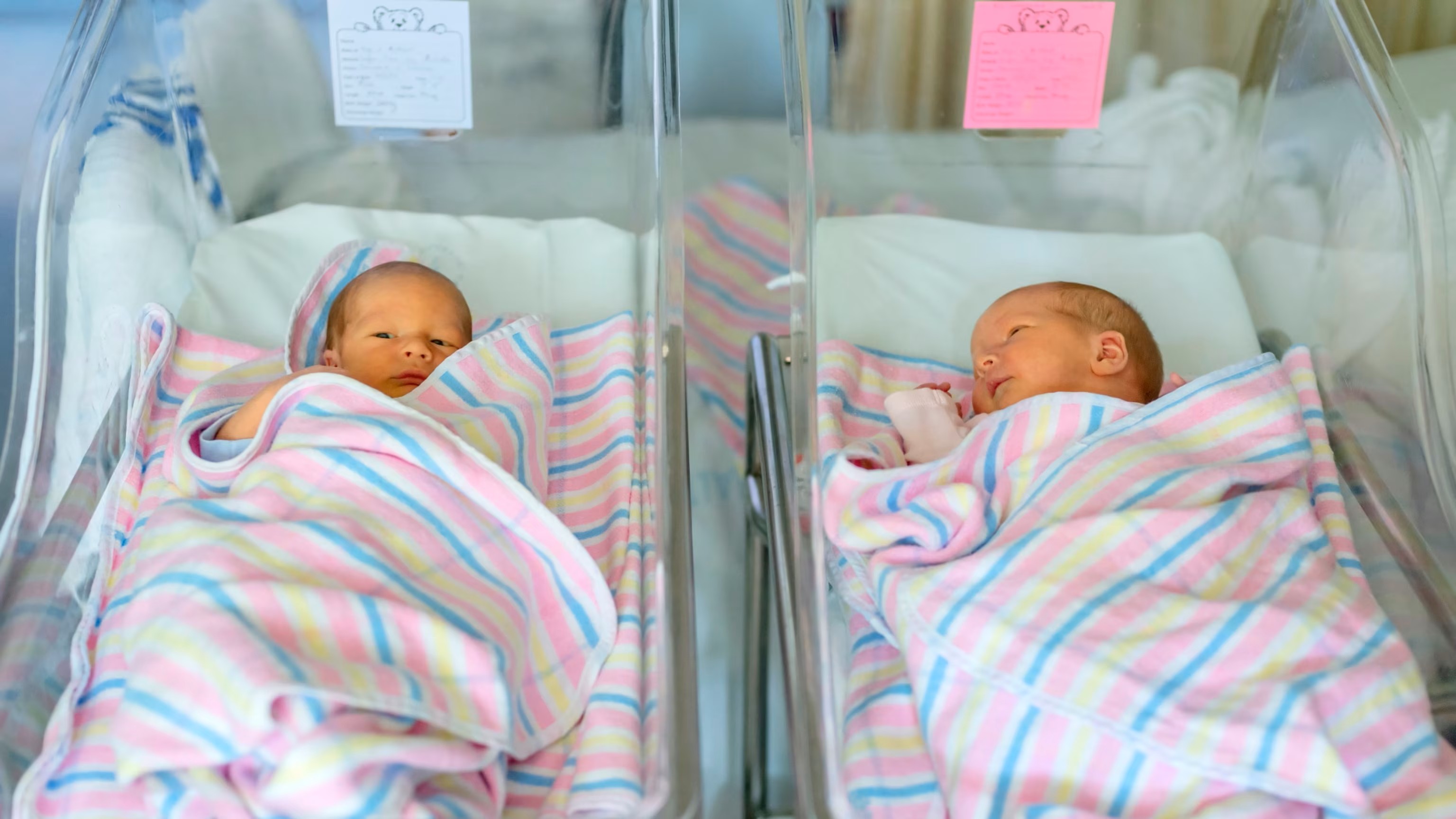
Baby More parents are declining vitamin K shots for newborns, putting more babies at risk of bleeding: study With shot numbers declining, a study found more babies are at risk of bleeding. More parents are declining vitamin K shots for newborns, putting more babies at risk of bleeding, a study says. ABCNews By Dr. Jade Cobern and Mary Kekatos Thursday, November 5, 2026 6:35PM Share Follow ABC7 on Google CHICAGO -- For most of his nearly 30-year career, Dr. Thomas Patterson rarely had a parent refuse the vitamin K shot for their newborn, which is recommended at birth to protect babies from severe bleeding in early life. However, what Patterson says was once uncommon has become a regular occurrence when the Idaho pediatrician is working in a newborn nursery in the southwest region of the state. "Prior to, say [20]22 or so, vitamin K refusals were very sporadic and rare, and they weren't all-consuming," Patterson told ABC News. "There has been a significant uptick for me ... One day [this year], I had 10 babies and five of them went out of the hospital without vitamin K." RELATED: Here's why experts say now is an ideal time to protect yourself from flu What Patterson is seeing is reflected in new research published in JAMA on Thursday from the Children's Hospital of Philadelphia (CHOP). Speaking first to ABC News, two of the study's authors said these findings built upon previous research the team had done. The new study included updated data from 2025, which showed an increasing number of babies who are not receiving vitamin K injections at birth. "This is certainly evidence that more babies are not receiving vitamin K, and more babies are at risk of bleeding," Dr. Kristan Scott, lead author of the study, former research fellow at CHOP, and now an assistant professor of pediatrics at Children's Healthcare of Atlanta, told ABC News. After analyzing more than 5.2 million health records from Epic Cosmos data, the team said they found that from 2017 to 2025, the percentage of babies who didn't receive a vitamin K shot at birth more than doubled from 3.1% in 2017 to 6.8% in 2025. Between 2024 and 2025, the percentage of babies who did not receive the vitamin K shot rose by about 20%, from 5.6% to 6.8%, respectively, in the study. "It's certainly not something that I wanted to see but I think, given the trend in what we had seen from years prior, it was not [surprising]," Scott said. Why the vitamin K shot is given to newborns Vitamin K is necessary to help the body form clots appropriately, but babies are born with very small amounts of this vitamin and don't receive adequate amounts through their diet in the first few months of life. This puts them at increased risk of a condition called vitamin K deficiency bleeding (VKDB), according to the Centers for Disease Control and Prevention (CDC). To help prevent this bleeding, a vitamin K injection has been recommended for newborns in the U.S. since the early 1960s . It's given as a single, intramuscular shot soon after birth. "Vitamin K is absolutely critical for our livers to make the clotting factors that help our blood clot," Dr. David Hill, a hospitalist, pediatrician and spokesperson for the American Academy of Pediatrics (AAP), told ABC News. "What we're really worried about is serious life-threatening bleeding ... And often, by the time we figure out that bleeding is happening, it's really too late to stop the worst consequences of it." Since this injection became standard of care, doctors say it is very rare for babies to experience VKDB in the U.S., but they worry more babies will suffer from bleeding complications as more parents refuse the shot. In Hill's experience, Vitamin K refusal "has increased dramatically, and we're talking about an intervention that we have been using safely and effectively since 1961." Possible li f elong complications Newborns who do not receive the vitamin K shot at birth are at a higher risk of life-threatening bleeding. Of the infants who have late VKDB -- between 2 weeks old and 6 months old --- about half have brain bleeds, which can lead to permanent brain damage, according to the CDC . Other infants bleed into their stomachs or intestines, or other parts of the body. Many of these infants will require blood transfusions, and some may need surgeries, the CDC says. There are often no warning signs of VKDB, according to the agency. Live California election results 2026: California billionaire tax, Prop. 40, headed toward defeat 14 minutes ago Live election results for 2026 California propositions. Here's where the races stand California Gov. Newsom says he will commute all death sentences in state to life without parole 9 minutes ago In the new study, researchers also analyzed bleeding events documented in medical records at certain timepoints after birth through the first six months of life, among babies born at 35 to 43 weeks' gestation. They found that from 2017 to 2025, the rate of bleeding events increased among all babies, but more so among those who did not receive vitamin K at birth. These babies had a 47% increased risk of any bleeding event in their first six months of life, compared to those who did receive a vitamin K shot at birth, according to the study's findings. The risk of having any type of brain bleeding in the first six months of life more than doubled without the shot, and the risk of death during the birth hospitalization also more than doubled among babies who didn't receive a shot of vitamin K at birth, the study found. "When you don't get vitamin K today, we see very similar rates to what bleeding rates were before the routine administration of vitamin K," Dr. Heather Burris, a study author, neonatologist at CHOP and professor of pediatrics at the Perelman School of Medicine at the University of Pennsylvania, told ABC News. Dr. Scott Hadland, a pediatrician at Mass General Brigham for Children, said he cares for many older children, adolescents and young adults who have long-term complications from severe brain bleeding. "I've cared for a few patients who had a severe bleed shortly after birth, and it was likely caused by lack of vitamin K," he said. In general, Hadland said some patients with severe brain bleeds in infancy can develop long-term movement problems, including cerebral palsy, may develop behavioral challenges, or may require a shunt to manage high pressures around their brain. "A lot of families are thinking about their baby in the moment but not realizing that the decision they make [not to get the vitamin K shot] actually has consequences that can last for decades," he added. Death is also a risk. Twenty percent of babies with VKDB -- one out of every five -- die, according to the CDC . Patterson, the pediatrician from Idaho, said he's heard from colleagues across the state who have treated babies in the neonatal intensive care unit with brain bleeds after not getting the vitamin K shot. "We can't put a number on the exact number of deaths, but I know of at least two. I could easily say three with some confidence," Patterson said. "As someone who's done first responder resuscitations for babies for decades, I have videos in my head of every baby that's ever lost their life on my watch. I have been fortunate not to see that because ... of refusal of vitamin K." Why is this happening? Doctors told ABC News there are several reasons that some parents have refused the vitamin K shot for their newborns. Patterson said many parents bring up that vitamin K has a black box warning. It's most stringent the FDA can require from a drug manufacturer, requiring that clinical data shows the drug can cause severe harm, hospitalization or death. However, the warning is based on a risk that applies to adults who are receiving high, intravenous doses -- not the much smaller, intramuscular vitamin K dose babies receive. Some parents have als
By Katherine Langford

By Marcus Chen

By Katherine Langford
By Katherine Langford